


Cost of Living for Students in Dublin (2026): What to Budget
Full breakdown of what Dublin actually costs students in 2026: rent by area, groceries, transport, bills, and real ways to save, so you can budget before you book, not after.

Nearly one fourth of Ireland’s international students travel to Dublin for their university life. That’s because some of the best universities in Europe, like Trinity College & University College Dublin, etc offer top-ranked programs. Plus, there are over seven hundred European headquarters of major corporations employing thousands of people located in this little city. And yet, this very small, walkable, and student-friendly capital is consistently priced far above budget for nearly everyone.
Dublin is also one of the most expensive places to reside in, as compared to other areas in Ireland. So, in case you’re looking to live comfortably in Dublin, you’ll have to plan your expenses in advance and pick timely student accommodation so you don’t miss out on deals and the best prices. In this blog, we have curated everything you need to budget your life in Dublin as a student- typical living expenses, housing costs, public transport costs, groceries, and a lot more.
At a Glance: Average Monthly Cost of Living in Dublin
Student living costs for in Dublin 2026:
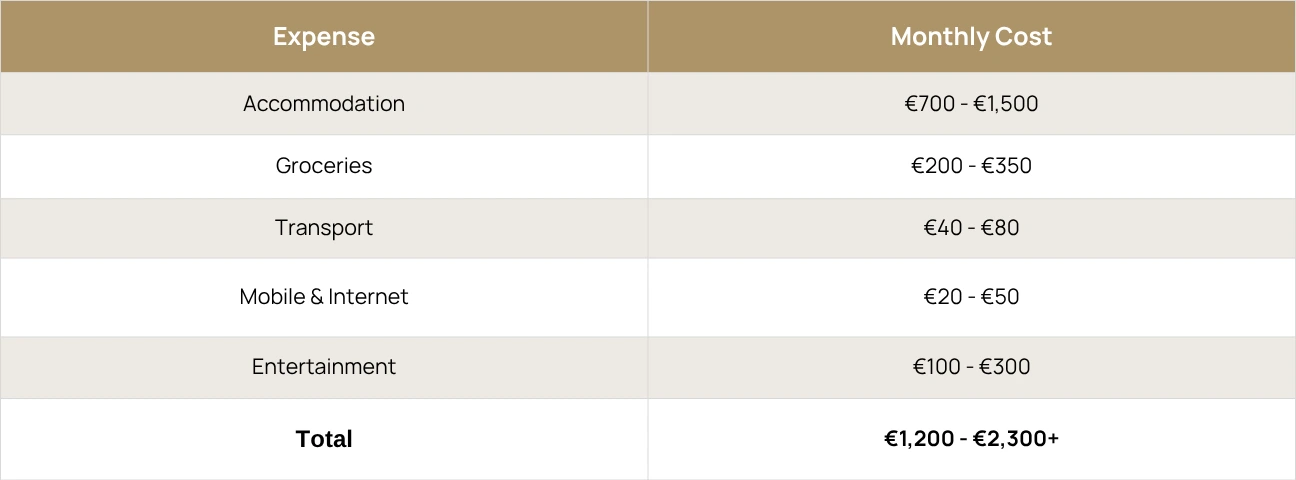
Most students budget around €1,300 to €2,000 per month, depending on accommodation choice and lifestyle.
Student Accommodation Costs in Dublin
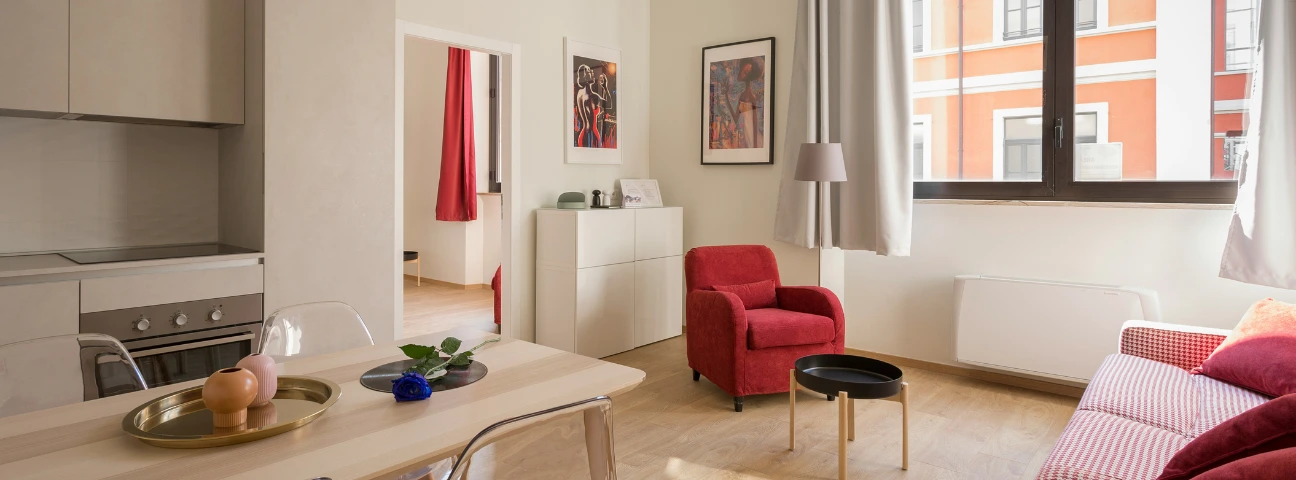
The biggest expense for students in Dublin is their accommodation. Students end up spending 40% to 50% of their monthly income on accommodations. Therefore, it would be beneficial to get this area correct first. There will be three main types of accommodation in Dublin available for students. Each has a different price range and its own advantages and disadvantages. For a full breakdown of room types, best neighbourhoods, and booking timelines, see our complete guide to student accommodation in Dublin.
1. University halls
Rent: €700 to €1100 per month
University halls are student accommodations that are managed by universities and are usually located on the university campus or nearby. They offer different types of rooms for students, like en-suites, shared, and studios. Although shared apartments are the most common type of apartments offered by university halls.
University halls provide proximity to the campus and all campus facilities. They are also the best option for you if you want to be around your university friends and love socializing and making friends. The price of each university hall varies from university to university and the room type you choose. Although in most universities availability of rooms in limited and gets filled in a matter of minutes.
2. Private student accommodation (PBSA)
Rent: €900 to €1800+ per month
PBSA or Purpose Built Student Accommodation are managed privately and are specifically designed for students. Rooms in PBSAs consist of studio spaces, individual bedrooms with en-suite bathrooms located in shared apartments or two-bedroom space where one student pays half the rent. In most cases, PBSA renters pay a fixed monthly fee that covers electricity, heat, water and wifi. This predictability in rent and spending allows students to budget accordingly.
3. Shared apartments and student flats
Rent: €600 to €1,200 per month
This is usually the cheapest option of housing for students, especially if you want to live away from the city centre. Rents in this range generally do not include bills, so factor in an extra €80 to €150 per month for electricity, heat, and internet. Finding a good share takes time. Dublin's rental market is competitive, and good listings often go within 24 hours.
Accommodation costs by area
Where you live in Dublin makes a real difference to your student accommodation cost Dublin students pay. Here's what a room in a shared property typically costs in 2026:
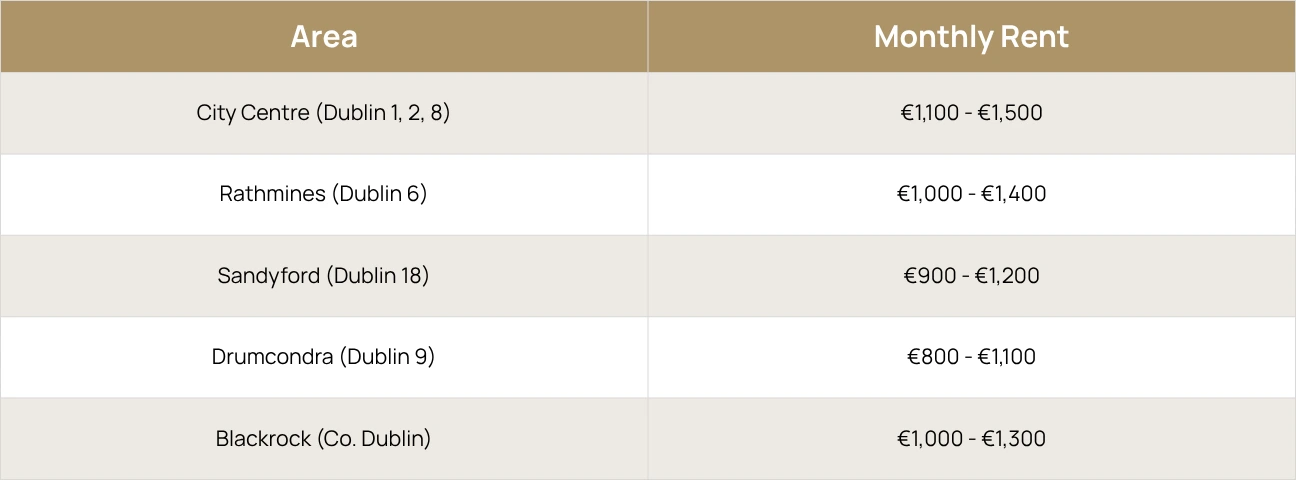
👉 Tip: Drumcondra and Phibsborough are popular with DCU students and offer better value than the southside. If you are at UCD, Sandyford, Stillorgan, and Blackrock are easy commutes via Luas or DART.
Food and Grocery Costs

Most students spend €200 to €350 per month on groceries in Dublin. If you cook at home and shop at discount supermarkets like Lidl, Aldi, or Tesco, you can comfortably stay at the lower end of that range.
Typical 2026 grocery prices look like this:
- Milk (1L): around €1.30
- Bread (loaf): around €1.80
- Eggs (dozen): around €3.70
- Chicken fillets (1kg): around €9
- Rice (1kg): around €1.80
- Pasta (500g): around €1.20
- Apples (1kg): around €2.80
Weekly grocery shops range from €45 to €90 depending on what you buy.
Eating out
A casual restaurant meal costs around €15 to €20. A coffee runs €3 to €5, and a pint of beer usually sits between €5 and €7. Mid-range dinners come in around €25 to €35 per person. Eating out adds up fast, so most students keep it to weekends.
Transportation Costs
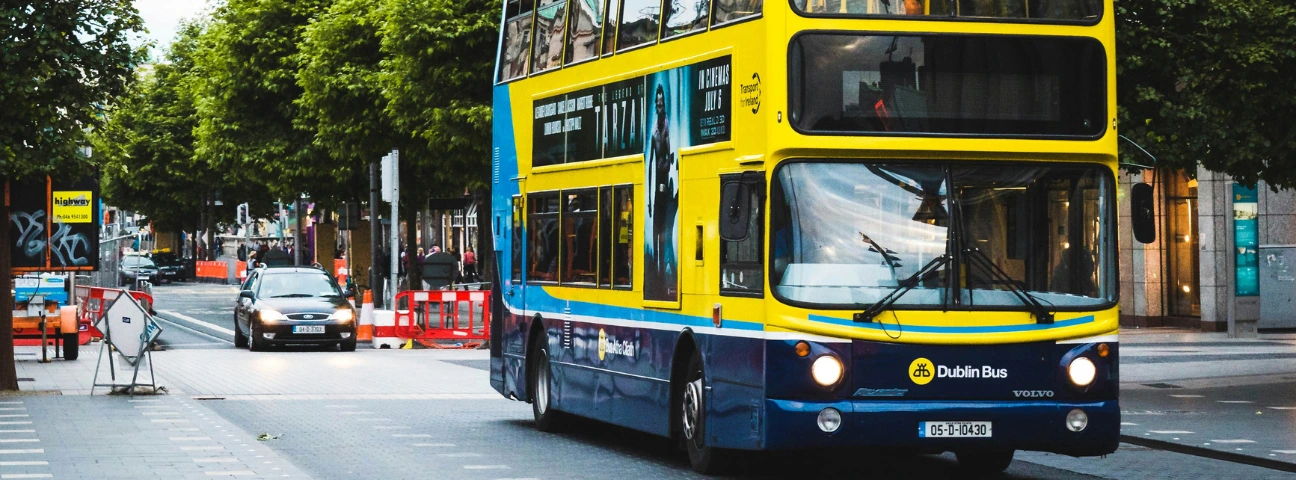
Public transport in Dublin is genuinely cheap if you get a Student Leap Card. With the card, you pay just €1 for any 90-minute journey on Dublin Bus, Luas, DART, or commuter rail. Your spending is also capped at €3 per day and €12 per week, so once you hit the cap, every other trip is effectively free.
In practice, most students spend €40 to €80 per month on transport.
What the network covers:
- Dublin Bus: runs across the entire city and suburbs
- Luas: Dublin's two tram lines, Red and Green
- DART: the coastal commuter rail line
- Irish Rail commuter services: for trips further out
A standard adult monthly pass without student capping costs around €140, so the discount is significant. Cycling is also popular. Dublin has expanding bike lanes and a public bike-sharing scheme called Dublinbikes, with an annual student subscription of around €25.
Utility Bills and Internet

If you live in a shared flat where bills are not included, expect €80 to €150 per month per person for electricity, gas, and Wi-Fi combined. Costs are higher in winter, when Dublin's homes are heated more between October and March.
Rough monthly estimates for a shared apartment, split across flatmates:
- Electricity and gas: €30 to €70 per person
- Wi-Fi: €15 to €20 per person
- Bin charges: around €5 to €10 per person
- Water: no charge for normal domestic use
If you rent PBSA or a serviced student apartment, bills are almost always included in your rent. This makes budgeting much more predictable and is worth weighing against the slightly higher headline rent.
Mobile Phone Costs

Mobile plans in Ireland start at around €10 to €15 per month for prepay options and rise to about €30 for SIM-only plans with high data. Most students spend €15 to €25 monthly.
Common providers include:
- Vodafone Ireland
- Three Ireland
- Eir
- Tesco Mobile
- 48
- GoMo
- Lycamobile
👉 Tip: 48 runs a long-standing student plan at around €11 per month with unlimited calls, texts, and 100GB of data. Prepaid SIMs from Lyca and Tesco Mobile can also be picked up free in most supermarkets.
Entertainment and Social Life

Most students budget €100 to €300 per month for entertainment, depending on how often they go out.
Typical costs:
- Cinema ticket: €10 to €15
- Gym membership: €30 to €50
- Pint of beer: €5 to €7
- Nightclub entry: €10 to €20
- Weekend trip within Ireland: €40 to €80
Dublin also has free of cost ways of entertainment, check out Phoenix Park, the Botanic Gardens, the National Museum of Ireland, and Dublin Castle grounds and look for free events that happen throughout the year.
Healthcare and Miscellaneous Expenses

The expense of healthcare as part of the costs associated with attending college in Ireland is probably the least considered item for non EU students. In addition to travel and tuition fees, all non-EU students are required to have private health insurance when they register with Irish Immigration Services. Travel Insurance that you purchased prior to coming to Ireland will likely only cover you during your first year, however from the second year on, you will be required to purchase a policy issued by an Irish based health insurance provider.
Typical international student expenses Dublin students should plan for:
- Private health insurance: €200 to €500 per year for basic plans, up to €1,000 for comprehensive cover. Major providers are Vhi, Laya Healthcare, and Irish Life Health.
- Irish Residence Permit (IRP) card: €300 per year for non-EU students
- GP visit (without medical card): €50 to €70
- Study materials: €30 to €80 per month, depending on course
- Laundry, personal care, miscellaneous: €40 to €80 per month
EU and EEA students can access Ireland's public healthcare using a European Health Insurance Card, though GP visits still cost €50 to €70 out of pocket.
How to Save Money as a Student in Dublin
A few simple habits can take significant money off your monthly bill:
- Book accommodation early: Demand outstrips supply every year. The cheapest rooms are gone by July. Explore the best months to book student accommodation in Dublin
- Get a Student Leap Card on day one: Weekly fare capping at €12 takes most of the cost out of transport.
- Cook at home and shop at Lidl or Aldi: Discount supermarkets are 20 to 30 percent cheaper than mid-tier chains.
- Live with flatmates: Shared bills, shared cooking, and shared bin charges drop monthly spend significantly.
- Use your student ID everywhere: Many cinemas, gyms, cafés, and museums offer student discounts you have to ask for.
- Choose all-bills-included accommodation: It removes winter heating spikes and makes budgeting predictable.
Is Dublin Expensive for Students?
Yes, depending on comparisons, it may be very expensive – for instance, when comparing to the cost of living in London (rent, etc.), Dublin is about 20-30% less than London. Most students moving from London find their day-to-day costs have decreased since moving to Dublin.
Compared to Manchester, Glasgow & other major UK Cities; however, Dublin is typically around 25-30% higher due to rental rates alone. When you consider grocery shopping, public transport & eating out costs are comparable to those found in other major cities.
However, one important factor in balancing Dublin’s otherwise high price point is its job market. As a student with a Non-EU Visa & working under your Stamp 2 Permit allows you to work as much as 20 hours/week while school is in session & full-time (40 hours/week) during both Summer Breaks (June – Sept.) and Winter Breaks. As an hourly rate, these types of jobs begin at approximately €13.50 in 2026.
Find Student Accommodation in Dublin with Alphaway
Housing is probably one of the biggest monthly expenses for students in Dublin and that’s why finding the right one matters. Alphaway lists verified student accommodation across Dublin at multiple price points, with all-inclusive rent options, properties close to every major university, and clear, comparable details on every listing.
Compare options and book early to lock in the best rooms and deals!

FAQsFrequently Asked Questions
How much should I budget for food in Dublin?
Is Dublin expensive for international students?
How much does student accommodation cost in Dublin?
Are utility bills included in student accommodation?
How much does it cost to live in Dublin as a student?
Similar blogs

Top UK Universities for Middle Eastern Students 2026
Explore the best UK universities for Middle Eastern students in 2026. Compare courses, rankings, scholarships & campus life for a successful study abr...
Ultimate Guide to Student Accommodation in Queensland
Plan your student life in the Australia with our 2026 cost of living guide. Learn how to budget for rent, food, travel, and more across major Queensla...

Student Cost of Living in London: Budget Tips & Guide
Discover the average cost of living for students in London, plus smart budgeting tips on rent, food, transport, and more to manage your finances with ...